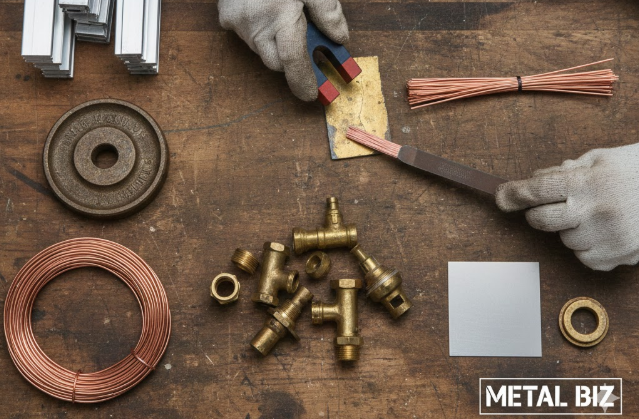
To maximise your earnings when recycling, you must understand the difference between high-value non-ferrous materials and common ferrous metals. The beginner’s guide to identifying high-value scrap metal at Metal Biz yards provides the essential knowledge needed to sort your inventory for the highest possible return. By mastering simple identification techniques—such as the magnet test and visual inspections—you can ensure your workshop or garage clean-up translates into a significant payout.
What Defines High-Value Scrap Metal?
High-value scrap metal in Logan is defined by its chemical composition, scarcity, and industrial demand, typically falling into the non-ferrous category. Unlike common steel or iron, high-value metals like copper and brass do not contain iron, which makes them highly resistant to corrosion and superior as electrical conductors. These intrinsic properties ensure they maintain a high market price regardless of their age or physical condition.
The 2 Main Categories of Scrap Metal
Before visiting a recycling yard, you must categorise your materials into two distinct groups based on their iron content. This primary sort determines the baseline value of your haul.
| Category | Primary Feature | Examples | Magnetic? |
| Ferrous | Contains Iron | Steel beams, car bodies, cast iron pipes, appliances. | Yes |
| Non-Ferrous | No Iron | Copper wire, brass taps, aluminium cans, lead batteries. | No |
Essential Tools for Metal Identification
To identify scrap metal accurately, you require 4 basic tools that are likely already in your toolbox. Using these items prevents you from accidentally selling a high-value item at the lower “mixed steel” rate.
-
A Strong Magnet: This is your most critical tool. If the magnet sticks, the metal is ferrous (low value). If it does not stick, the metal is non-ferrous (high value).
-
A Metal File: Filing the surface of a metal reveals the “true” colour beneath any paint, rust, or oxidation.
-
A Handheld Grinder (Optional): Testing the sparks produced by a grinder helps professionals identify different steel alloys.
-
Heavy-Duty Gloves: Personal safety is paramount when handling sharp-edged scrap like roofing iron or copper stripping.
Top 5 High-Value Metals to Look For
Identifying these 5 specific metals ensures you focus your efforts on the materials that yield the best financial results.
1. Copper (The “Gold” of Scrap)
Copper is the most sought-after non-ferrous metal due to its essential role in electrical and plumbing infrastructure.
-
Where to find it: Look in electrical cables, air conditioning tubing, plumbing pipes, and electric motor windings.
-
Identification: It has a distinct reddish-pink hue when clean. If it has been outdoors, it may have a green crust (oxidation).
-
Grades: “Bare Bright” copper (stripped, clean wire) fetches the highest price, followed by “Number 1” (unpainted tubing) and “Number 2” (painted or soldered pipes).
2. Brass (Yellow Gold Appearance)
Brass is a heavy alloy of copper and zinc, often used in decorative and high-pressure fluid applications.
-
Where to find it: Check for doorknobs, light fixtures, plumbing valves, and musical instruments.
-
Identification: It has a yellowish, gold-like appearance. When filed, the golden colour remains consistent throughout the metal.
-
Use case: Common in older Queenslander homes during renovations.
3. Aluminium (Lightweight and Versatile)
Aluminium is a silver-coloured metal that is significantly lighter than steel and does not rust.
-
Where to find it: Sourced from window frames, drink cans, engine blocks, and siding.
-
Identification: It is non-magnetic and very light. Unlike stainless steel, it is easy to bend or dent.
-
Tip: Clean aluminium (free of steel screws or rubber seals) is worth more than “dirty” aluminium.
4. Stainless Steel (High-Grade Alloys)
Stainless steel contains chromium and nickel, making it valuable but often difficult for beginners to distinguish from regular steel.
-
Where to find it: Kitchen sinks, commercial kitchen equipment, and marine fittings.
-
Identification: Most high-grade stainless steel (like 304 or 316) is non-magnetic. If a magnet sticks even slightly, it is likely a lower grade or common steel.
5. Lead (Heavy and Soft)
Lead is a very dense, dull grey metal used primarily for its weight and radiation-shielding properties.
-
Where to find it: Wheel weights, old roof flashing, and lead-acid car batteries.
-
Identification: It is extremely heavy for its size and soft enough to be scratched with a fingernail.
-
Safety Note: Always wear gloves when handling lead as it is toxic if ingested.
How to Prepare Your Scrap for Maximum Profit
To get the best price when you bring your items to the weighbridge, you must process the metal to remove “contaminants.” Scrap yards pay a premium for “clean” metal because it requires less processing before smelting.
-
Strip Copper Wire: Use a utility knife or a stripping machine to remove plastic insulation from thick cables.
-
Remove Steel Screws: Take a screwdriver to aluminium window frames to remove any steel hinges or fasteners.
-
Drain All Fluids: Ensure that engines, gearboxes, or radiators are completely drained of oil and coolant before transport.
-
Separate by Grade: Keep your clean copper in a separate bin from your soldered copper to avoid being paid the lower rate for the entire lot.
Situational Relevance: Why Scrap Now?
The value of scrap metal fluctuates daily based on the global commodities market and local demand in Brisbane. Currently, the push for renewable energy is driving up the demand for copper, as electric vehicles and solar panels require significantly more wiring than traditional technologies.
Pros and Cons of Scrapping for Beginners
Understanding the trade-offs of scrap metal recycling helps you manage your time and expectations effectively.
Pros:
-
Environmental Impact: Recycling aluminium saves 95% of the energy required to produce it from raw ore.
-
Decluttering: It provides a productive way to clear out construction waste or old farm machinery.
-
Tax-Free Cash: For individuals, the money earned from selling household scrap is generally a quick way to offset disposal costs.
Cons:
-
Labour Intensive: Stripping wire and dismantling appliances takes time and physical effort.
-
Transportation: You need a ute or trailer to transport heavy loads to the yard safely.
-
Price Volatility: Market rates can drop, meaning your stored scrap might be worth less today than it was last month.
Choosing a Trusted Partner
When you are ready to offload your collection, visiting a professional facility ensures you receive a fair, transparent price. Licensed operators use calibrated weighbridges to provide precise measurements. Many locals looking for a reliable destination to drop off their materials choose Metal Biz for their honest weighing practices and rapid payment systems.
Target Audience for This Guide
This guide is tailored for 3 specific groups in the Brisbane area:
-
DIY Renovators: Homeowners removing old plumbing and electrical fixtures.
-
Tradespeople: Electricians and plumbers who generate offcuts daily.
-
Casual Scrappers: Individuals looking to turn a weekend clean-up into extra petrol money.
Final Identification Checklist
Before you load the trailer, run through these 3 final checks:
-
Did I use the magnet? Ensure no steel is mixed in with your non-ferrous piles.
-
Is it clean? Check for wood, plastic, or rubber attachments.
-
Do I have ID? Queensland law requires a photo ID for all scrap metal transactions.
- learn more: https://www.metalbiz.com.au/scrap-metal/rocklea/