Human Resources has always been a people-centric function, but as organizations grow, HR teams often struggle with repetitive tasks, data overload, and slow decision-making. From screening hundreds of resumes to answering the same employee questions every day, much of HR work is operational rather than strategic.
This is where AI HR agents are making a real difference. Instead of replacing HR professionals, these intelligent systems support them by automating routine tasks, improving accuracy, and enabling faster, data-driven decisions. As businesses look for smarter ways to manage talent, AI HR agents are becoming a key part of modern HR operations.
In this article, we’ll explore what an AI HR agent is, how it works, and how it is transforming human resources across recruitment, onboarding, employee engagement, and workforce management.
What Is an AI HR Agent?
An AI HR Agent Development is an intelligent software system designed to perform HR-related tasks autonomously or semi-autonomously. Unlike traditional HR software that follows fixed rules, AI HR agents can analyze data, understand context, and adapt their responses over time.
These agents use technologies such as artificial intelligence, machine learning, and natural language processing to interact with candidates and employees, process HR data, and support decision-making. They can operate through chat interfaces, dashboards, or integrated HR platforms, working continuously without manual intervention.
In simple terms, an AI HR agent acts like a virtual HR assistant that helps teams manage people-related processes more efficiently while maintaining consistency and accuracy.
How AI HR Agents Work
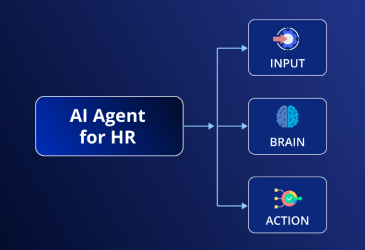
AI HR agents operate through a structured workflow that allows them to respond intelligently to HR needs.
First, the agent receives an input. This could be a candidate submitting a resume, an employee asking a question, or an HR system generating new data. The agent then analyzes the input using predefined rules and learned patterns.
Based on this analysis, the agent takes action. This might include shortlisting candidates, answering employee queries, scheduling interviews, updating records, or generating reports. Over time, the agent learns from outcomes and feedback, improving its responses and decisions.
This ability to learn and adapt is what separates AI HR agents from traditional automation tools.
Role of AI HR Agents in Recruitment
Recruitment is one of the most time-consuming HR functions, and AI HR agents are transforming how hiring is done.
AI HR agents can automatically screen resumes by matching skills, experience, and qualifications against job requirements. This reduces manual effort and helps recruiters focus on high-quality candidates. They can also rank candidates objectively, minimizing unconscious bias in early screening stages.
During the hiring process, AI HR agents can schedule interviews, send follow-up messages, and answer candidate questions in real time. This improves candidate experience by keeping communication fast and consistent.
With HR Recruitment Automation Software tasks, HR teams can spend more time evaluating cultural fit and making better hiring decisions.
Improving Employee Onboarding with AI HR Agents
Employee onboarding sets the tone for the entire employment journey, yet it often involves repetitive paperwork and basic queries. AI HR agents streamline this process by guiding new hires step by step.
An AI HR agent can share onboarding documents, explain company policies, assist with account setup, and answer frequently asked questions. Instead of waiting for HR availability, new employees get instant support.
This leads to smoother onboarding, faster productivity, and a more positive first impression of the organization.
Enhancing Employee Support and Engagement
Employees frequently contact HR for information related to leaves, payroll, benefits, or policies. Handling these requests manually consumes significant HR time.
AI HR agents can act as a first point of contact for employee queries. Through chat-based interfaces, they provide instant answers, route complex issues to human HR staff, and ensure consistent information delivery.
Beyond support, AI HR agents can also help track engagement levels by analyzing feedback, surveys, and interaction data. This allows HR teams to identify issues early and take proactive steps to improve employee satisfaction.
AI HR Agents in Performance Management
Performance management requires continuous monitoring, feedback, and evaluation. AI HR agents help simplify this process by collecting and analyzing performance data from multiple sources.
They can track goals, provide reminders for reviews, and generate performance insights for managers. Some agents also help identify skill gaps and recommend training programs based on employee performance trends.
This data-driven approach enables fairer evaluations and supports employee growth through personalized development plans.
Workforce Planning and Analytics
Strategic HR decisions rely heavily on accurate data. AI HR agents play a critical role in workforce planning by analyzing historical and real-time data.
They help predict hiring needs, identify attrition risks, and optimize workforce allocation. By spotting patterns in employee turnover or performance, AI HR agents allow organizations to act before problems escalate.
This makes HR more proactive rather than reactive, aligning people strategy with business goals.
Benefits of Using AI HR Agents
Organizations adopting AI HR agents experience several practical benefits.
One major advantage is time savings. By automating routine tasks, HR teams can focus on strategic initiatives such as talent development and culture building.
Accuracy and consistency also improve, as AI agents reduce manual errors and ensure uniform policy application. Faster response times enhance both candidate and employee experiences.
Additionally, AI HR agents support better decision-making by providing data-driven insights, helping organizations build stronger, more agile HR operations.
Challenges and Considerations
While AI HR agents offer clear advantages, thoughtful implementation is essential. Poor-quality data can lead to inaccurate decisions, so maintaining clean and updated HR data is critical.
Organizations must also ensure transparency and fairness. Employees should understand how AI is used in HR processes, especially in recruitment and performance evaluation.
Human oversight remains important. AI HR agents should support HR professionals, not replace empathy, judgment, and personal interaction.
The Future of AI HR Agents
As AI technology continues to evolve, AI HR agents will become more intelligent and context-aware. Future agents will handle complex conversations, provide predictive insights, and integrate seamlessly with broader business systems.
They will play a larger role in personalized employee experiences, continuous learning, and strategic workforce management. For organizations willing to adopt them responsibly, AI HR agents represent the future of efficient and human-centered HR operations.
Conclusion
AI HR agents are reshaping human resources by automating repetitive tasks, improving decision-making, and enhancing employee experiences. From recruitment and onboarding to engagement and workforce planning, these intelligent systems help HR teams work smarter and more strategically.
When implemented thoughtfully, AI HR agents do not replace human expertise but amplify it. They free HR professionals from operational burdens, allowing them to focus on what truly matters: building strong teams, nurturing talent, and supporting organizational growth.
FAQ
What does an AI HR agent do?
An AI HR agent automates routine HR tasks like resume screening, employee queries, and interview scheduling. It helps HR teams save time and work more efficiently.
Can AI HR agents replace human HR teams?
No, AI HR agents support HR professionals by handling repetitive work. Human judgment and empathy are still essential for strategic and people-focused decisions.
Are AI HR agents safe to use for employee data?
Yes, when implemented properly with security and compliance measures. Organizations must ensure data privacy and maintain human oversight.