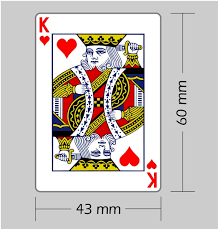
Playing cards are used worldwide for games, magic tricks, casinos, promotions, and branded merchandise. While they may look simple, the dimensions of playing cards are carefully standardized to ensure comfort, durability, and compatibility with card boxes and accessories. Understanding these dimensions is important for card manufacturers, designers, printers, and packaging brands.
This guide explains standard playing card sizes, variations, thickness, and custom dimension options.
Standard Dimensions of Playing Cards
The most commonly used playing cards follow international standards. These sizes are designed to fit comfortably in the hand and work with standard card shuffling techniques.
Poker Size Playing Cards
Poker size is the most popular and widely used playing card dimension, especially in casinos and professional games.
-
Size: 2.5 × 3.5 inches
-
Metric: 63 × 88 mm
Poker cards are slightly wider, making them ideal for games where players hold fewer cards, such as poker and Texas Hold’em. They are also commonly used for promotional and branded card decks.
Bridge Size Playing Cards
Bridge size cards are slightly narrower than poker cards.
-
Size: 2.25 × 3.5 inches
-
Metric: 57 × 88 mm
These cards are preferred for games where players need to hold many cards at once, such as bridge or rummy. The narrower width reduces hand fatigue during long games.
Thickness of Playing Cards
Playing card thickness is just as important as length and width. Thickness affects durability, flexibility, and the overall feel of the deck.
-
Standard thickness: 0.30 – 0.33 mm per card
-
Deck thickness (52 cards): Approx. 17–18 mm
Card stock options include:
-
Standard paperboard
-
Premium cardstock
-
Plastic or PVC cards for water resistance
Dimensions of a Full Playing Card Deck
When designing packaging such as custom playing card boxes, deck dimensions must be considered.
Typical boxed deck size:
-
Length: 3.6–3.7 inches
-
Width: 2.6–2.7 inches
-
Height: 0.7–0.8 inches
These measurements vary slightly based on card thickness and box material.
Custom Playing Card Dimensions
Many brands choose custom playing card sizes for marketing, education, or novelty purposes.
Common custom options include:
-
Mini playing cards
-
Jumbo playing cards
-
Square or rounded-edge cards
-
Tarot card sizes (2.75 × 4.75 inches)
Custom dimensions are often paired with custom printed boxes, tuck-end boxes, or rigid packaging to match branding needs.
Why Playing Card Dimensions Matter
Correct playing card dimensions are important for several reasons:
-
Comfortable hand grip
-
Smooth shuffling and dealing
-
Compatibility with card holders and boxes
-
Professional appearance
-
Accurate printing and cutting
For packaging companies, exact dimensions ensure that playing card boxes fit securely without damaging the deck.
Standard Playing Card Dimensions at a Glance
| Card Type | Inches | Millimeters |
|---|---|---|
| Poker Size | 2.5 × 3.5 | 63 × 88 |
| Bridge Size | 2.25 × 3.5 | 57 × 88 |
| Tarot Cards | 2.75 × 4.75 | 70 × 121 |
Conclusion
The standard dimensions of playing cards are carefully designed for comfort, gameplay, and packaging efficiency. Poker size and bridge size remain the industry standards, while custom dimensions offer flexibility for branding and special uses. Whether you are designing cards, printing decks, or creating custom designs boxes, understanding these dimensions ensures a perfect fit and a professional final product.