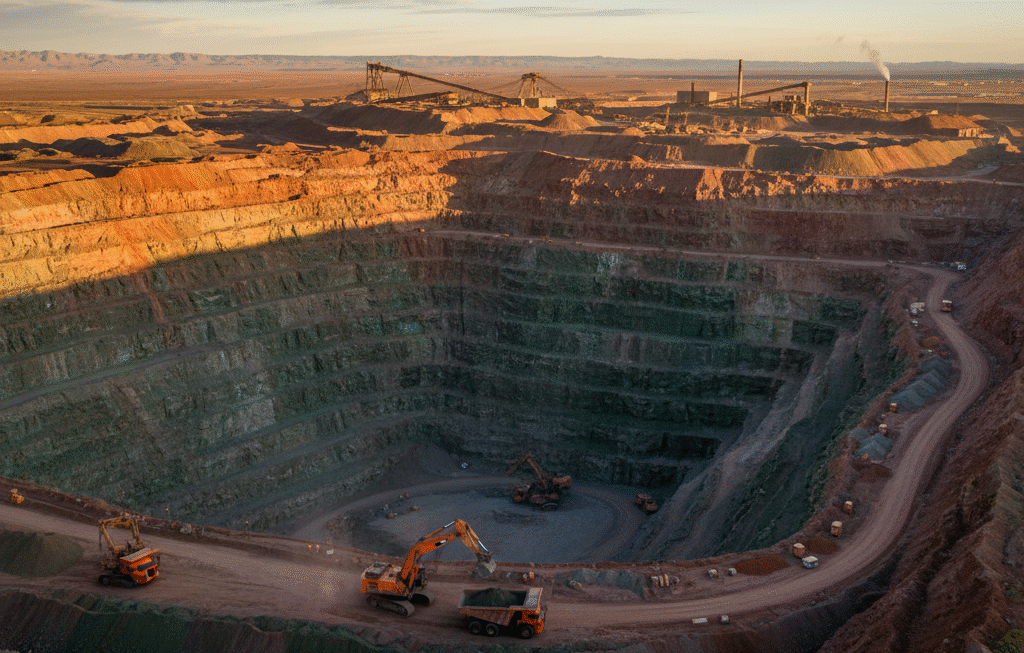
Mining in Michigan has played a significant role in shaping the state’s economy and landscape. Once home to hundreds of mines, Michigan was a major producer of copper, iron, and other minerals, contributing to industrial growth in the United States. Today, mining in Michigan continues, though on a smaller scale, focusing on metals like nickel, copper, and iron ore, alongside industrial minerals such as cement and salt.
The copper-rich Upper Peninsula once hosted the majority of active mines, with historic sites that fueled a mining boom in the 19th and early 20th centuries. Although most mines have closed, a few operations remain, including the Eagle Mine, which produces nickel and copper while emphasizing safety and environmental responsibility.
As mining evolves, new projects and technologies aim to balance resource extraction with community and environmental concerns. This dynamic continues to affect local economies and the future of mining in Michigan.
History and Current State of Mining in Michigan
Mining in Michigan has evolved significantly from ancient indigenous techniques to large-scale industrial operations. The state remains an important source of several key minerals, supported by defined regions with extensive activities. Modern mining continues to balance economic importance with advances in technology and sustainability.
Historical Overview of Mining Activities
Mining in Michigan dates back at least 5,000 years, when Native Americans extracted copper around 3000 B.C. Industrial mining began in the mid-19th century, with iron ore discovery in the Marquette Range in 1845. This was followed by mining in the Menominee Range starting around 1877 and later in the Gogebic Range in the 1880s.
During the late 1800s, Michigan was the nation’s leading producer of iron ore. Its mines supported both World Wars by supplying essential materials. As high-grade ore deposits diminished, a shift toward processing lower-grade taconite ores emerged in the 20th century, using new technologies developed by regional researchers.
Key Minerals Mined in Michigan
Michigan’s mining industry primarily focuses on iron, copper, and silver. Iron ore, especially taconite, dominates production due to the state’s extensive iron ranges.
Copper mining has a rich history and remains significant, especially in the Upper Peninsula, where some of the world’s oldest copper deposits exist. Silver is also extracted but on a smaller scale.
Other minerals like gypsum and zinc have seen limited mining activity. The economic value of Michigan’s nonfuel mineral production was roughly $1.75 billion in 2005, with the state ranking 11th nationwide in total value.
Major Mining Regions
Michigan hosts four primary metallic mining regions:
- Copper Country: Located in Keweenaw, Houghton, and Ontonagon counties, this district is known for copper deposits and historic mines.
- Marquette Iron Range: Situated in Marquette and Baraga counties, a major source of iron ore.
- Menominee Iron Range: Found in Dickinson and Iron counties, contributing significantly to iron production.
- Gogebic Range: Covers the western Upper Peninsula with both iron and some ongoing copper exploration.
These regions defined Michigan’s mining economy and shaped local communities, often attracting immigrant workers who fueled the industry’s growth.
Current Mining Operations
Mining remains active, especially in the Upper Peninsula. Modern operations focus largely on taconite ore, using open-pit mining and advanced beneficiation processes to extract iron.
Copper mining is experiencing renewed interest due to demand for battery minerals related to energy transition technologies. New projects emphasize sustainability and regulatory compliance.
Michigan’s mining industry now integrates automation, environmental safeguards, and community engagement. The industry’s value and employment persist as vital components of the state economy, maintaining its legacy as a key mineral resource supplier.
Economic, Environmental, and Regulatory Aspects
Mining in Michigan plays a significant role in the state’s economy while presenting environmental challenges. It is governed by a detailed regulatory system that ensures mining activities comply with safety and environmental standards.
Economic Impact of Mining
Mining contributes substantially to Michigan’s economy, particularly in the Upper Peninsula. The extraction of native copper, iron ore, nickel, and other metals supports local jobs and generates revenue. Historically, copper mining began in the 1840s and drove early development, while current mining activities focus on both metal and aggregate resources.
The industry attracts investment for new projects due to increasing demand for minerals used in electric energy and advanced technologies. Local economies benefit from wages, business for suppliers, and taxes. However, economic viability fluctuates with commodity prices and regulatory costs, influencing project initiation and continuation.
Environmental Considerations
Mining affects soil stability, vegetation, water quality, and wildlife habitats. Aggregate mining, for example, leads to significant land disturbance and groundwater pollution. Mining firms are expected to implement reclamation plans, restoring ecosystems after operations.
Environmental precautions focus on minimizing waste, preventing spills, and controlling dust. Efforts include restoring mine sites and protecting surrounding natural resources. Michigan imposes restoration fees on aggregate mining to fund land protection or rehabilitation elsewhere, aiming to balance economic activity with environmental health.
Regulatory Framework and Permitting
The Michigan Department of Environment, Great Lakes, and Energy (EGLE) oversees mining regulations. EGLE issues permits, inspects operations, and enforces compliance with environmental and safety laws. Regulations cover ore transportation, storage, waste disposal, and land reclamation after mining.
Mining companies must submit detailed plans for approval before starting projects. These plans include environmental impact assessments, reclamation strategies, and public notification. Compliance is monitored throughout the operation to prevent violations. The regulatory framework also encourages corporate social responsibility initiatives that exceed minimum legal requirements to mitigate mining’s broader impacts.